

PAXTON — For the first time since 2021, Ford County’s budget for the new fiscal year includes no federal dollars from the pandemic relief law known as the American Rescue Plan Act, or ARPA.
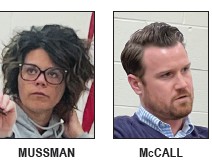
Even so, the budget for the county’s general fund is balanced — with equal revenue and expenditure projections of $5,838,786 for the 2026 fiscal year that began Monday, Dec. 1 — thanks to the efforts of the county board’s finance committee headed by Sarah Mussman of Gibson City, County Treasurer Krisha Whitcomb and the county’s various department heads.
“They worked diligently on figuring out a path forward without ARPA money,” the board’s chairman, Chase McCall of Gibson City, said after the budget was approved during a special meeting on Wednesday, Nov. 26. “This is going to be the first budget in four years where we don’t have the privilege of ARPA, so we have to figure out ways to, essentially, be responsible with taxpayer money while also trying to run a smooth operation in Ford County for these offices.”
McCall is pleased with the result so far: a budget that he called “one of the more well-done and comprehensive budgets we’ve seen in a while.”
“I think we were mostly concerned about not having the ARPA funds, but it looks like … we’re going to have a ‘soft landing’ in terms of our budget without ARPA,” McCall said. “Thanks to the hard work that Sarah and the finance committee and Krisha did to kind of help navigate life without ARPA, we ended up with a balanced budget, and I hope the folks of Ford County see that we’re being responsible with their tax dollars.”
In 2021 following the COVID-19 pandemic, the county received “a little over $2 million from the federal government” in ARPA funds to be used only to cover specified eligible expenses, McCall said. However, all of those funds have since been either spent or allocated, leaving less money to work with to cover costs in the new budget.
“A lot of that was allocated through certain salaries that matched what we could allocate for,” Mc- Call said. “We’ve allocated the remaining funds with the sheriff’s office so that (Sheriff Chad Johnson) can purchase necessary (public safety) equipment and things of that nature, and he will have to utilize all of that by Nov. 30, 2026.”
Still, McCall said the budget includes funds to allow for 4% pay raises for all nonunionized deputy clerks along with salary raises, as approved during the Nov. 26 special meeting, for Supervisor of Assessments Pam Bruens (to $67,000), Circuit Clerk Kasi Schwarz (to $64,500), Zoning Officer Brandon Magers (to $16,640), Emergency Management Agency Coordinator Terry Whitebird (to $13,520) and Assistant EMA Coordinator Danny Neal (to $4,420).
While not all budget requests from department heads were met due to a lack of available funds, McCall said “most” requests “were ironed out.”
“There’s always going to be folks that are unhappy with their budget, but unfortunately that’s the reality of it,” McCall said. “We’ve got to be responsible with taxpayer dollars, at the end of the day. Hopefully, when folks in Ford County see that the county board created a truly balanced budget, I think that matters more to them than, you know, arguments made, if you will, between the county board and department heads on ‘wants’ versus ‘needs.’”
In addition to revenue and expense projections in the general fund, the budget includes the same for each county department’s various “dedicated” funds.
“Everything should balance out in the dedicated funds,” too, McCall said.
Mussman said balancing the budget was a lot of work.
“Last year, our county operated with an unbalanced budget,” Mussman noted. “As finance chair, I knew we couldn’t continue down that path. This year, we implemented a complete overhaul of the budgeting process to align operations with how a responsible business truly functions — basing projections on actual expenses over a defined three-year period rather than relying on outdated, previously budgeted figures. This transition was significant and often difficult. Beginning in July, it required countless hours of analysis, conversations and careful planning, especially since this is the first budget cycle in five years without federal funds supplementing our revenue.”
Budgeting at the county level could get only more difficult in upcoming years, too, if the state’s budget deficit balloons to $6.5 billion or more within two years, as some have forecast, warned both McCall and Mussman.
“Moving forward, the future finance committees and future county boards are going to have to really consider the lack of funds or reimbursement from the state, because they are also projected to be hurting way worse than us,” McCall said. “Just keeping a mindful eye on that, I think, is important. I know Sarah and Krisha, they’ve had discussions about it and are aware of it. … And the county board that we have now, I think, recognizes that issue and wants us to get to again have, I guess, a ‘soft landing.’ … Those are some things that I think they’re going to be talking about through next year, maybe even the year after that.”
“Department heads and board members must begin identifying potential reductions or new revenue opportunities now,” Mussman said. “If we wait until next year, our options will be severely limited. … As we move forward, we all share the responsibility to be proactive, disciplined and accountable. Our choices today directly shape the county’s stability tomorrow.”
The next regularly scheduled monthly board meeting is at 6 p.m. Monday, Dec. 8, in the board room in the basement of the sheriff’s office and jail.
Executive committee
The board’s executive committee was scheduled to meet at 4:30 p.m. Tuesday, Dec. 2, in the board room at the sheriff’s office and jail. On the agenda for the meeting, which occurred past the Ford County Chronicle’s publication deadline, were the approval of a proposal to allow the probation department to destroy certain records and the appointments of two drainage commissioners to the Big Four Drainage District and one to the Sibley Drainage District. Members of the committee are McCall, its chairman, and Mussman, Randy Ferguson of Gibson City, Lesley King of Piper City, Greg Niewold of rural Loda, Tim Nuss of Roberts and Carson Vaughn of Paxton.
Sheriff committee
The board’s sheriff committee was scheduled to meet at 9 a.m. Wednesday, Dec. 9, in the board room at the sheriff’s office and jail. On the meeting’s agenda were the approval of claims; reports from the sheriff, coroner and EMA coordinator; approval of a donation policy and a hazard mitigation plan for the EMA; and approval of a law enforcement services contract between the sheriff’s office and village of Elliott. Members of the committee are Carson Vaughn, its chairman, and Ferguson, Mussman, Nuss and Gene May of Paxton.
Farm committee
The board’s farm committee was scheduled to meet at 4 p.m. Thursday, Dec. 3, in the board room in the basement of the sheriff’s office and jail in Paxton. On the agenda for the meeting, which is open to the public, are a review of the harvest records for the 2025 crop year for the three county-owned farms being leased for agricultural production; discussion and possible action on the reinvestment of farm account funds into certificates of deposit at a local bank; discussion and possible action on applying for tax-exempt status for the pasture ground on one of the county’s three farms that is enrolled into a U.S. Fish & Wildlife Service program; and discussion and possible action on seeking bids for an operator to maintain waterways and terraces for two of the county farms. Members of the committee are Niewold, its chairman, and Cindy Ihrke of rural Roberts, Garrett Kerber of Gibson City, Tom McQuinn of rural Paxton and Mussman.